The Architecture of Heartbreak: 20 Years of Amy Winehouse’s ‘Back to Black’
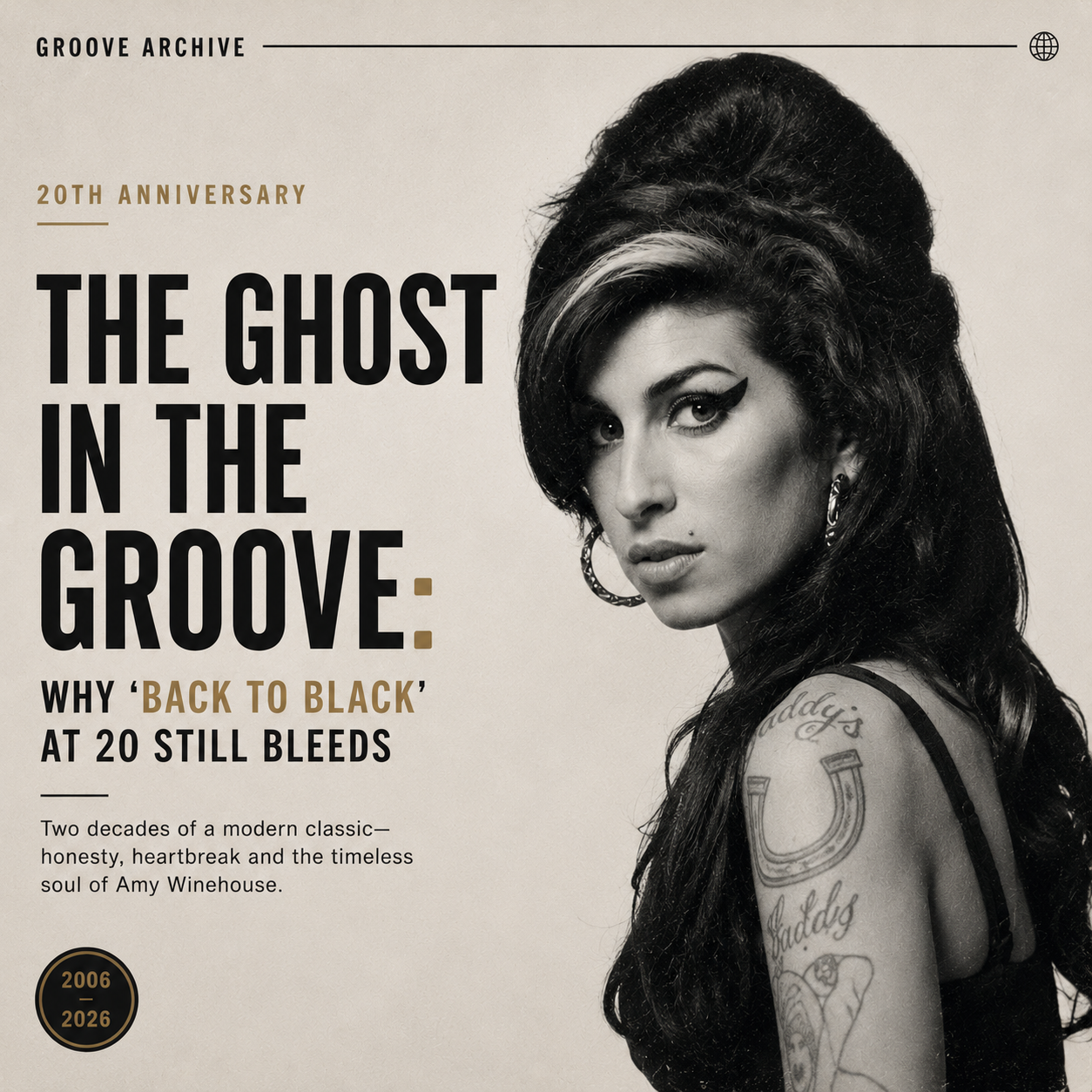
In this second installment of our anniversary series, we move away from the high-gloss laboratories of pop and into the smoke-filled, rain-slicked streets of Camden Town. If our first entry Justin Timberlake celebrated a vision of the future, this one explores a haunting reclamation of the past.
It has been twenty years since a 23-year-old from North London walked into a studio and decided to turn her personal wreckage into a monument.
In the autumn of 2006, the world was introduced to Back to Black, an album that felt less like a product of its time and more like a ghost that had finally found a body to haunt. Today, in 2026, the record hasn’t aged a day, largely because it never belonged to a specific era. It was a blood-stained transmission from a woman who lived every syllable she sang, bridging the gap between the 1960s “Wall of Sound” and the raw, unfiltered grit of the 21st century. As we revisit this masterpiece two decades on, we realize that Amy Winehouse didn’t just make a soul record; she redefined what it meant to survive—and ultimately succumb—through art.
The brilliance of Back to Black lies in its visceral honesty. While many artists “try on” vintage sounds like a costume, Winehouse inhabited the 1960s aesthetic because it was the only language large enough to hold her grief.
The Analog Pulse and Audiophile Warmth
The sonic architecture of this album is a masterclass in texture. By enlisting the Dap-Kings, Mark Ronson and Salaam Remi ensured that the record possessed a physical, breathing presence that modern digital production often lacks. For the high-fidelity enthusiast, Back to Black remains a benchmark; you can practically hear the room. The brass isn’t just a background element; it is sharp, biting, and immediate. The drums carry a dry, rhythmic thud that feels like it was captured in a basement during a 1964 storm. This analog warmth provided the perfect, grounded contrast to Amy’s soaring, often fragile delivery, creating a soundstage where every instrument feels like a character in a tragic play.
The Jazz Heart: Phrasing as Emotion
Though the world labeled it “Soul,” the engine of this album was Amy’s jazz-hardened intuition. She didn’t sing to the beat; she danced around it, often lagging behind the snare in a way that mimicked the timing of Sarah Vaughan or Billie Holiday. This “behind-the-beat” phrasing is where the emotional weight lives. In tracks like “Love Is a Losing Game,” her voice breaks and mends itself within the same measure. She understood that perfection is the enemy of soul. By treating her voice as a percussive jazz instrument, she managed to make lyrics about heartbreak feel like a late-night conversation whispered in a dark corner of a Soho bar.
The Lyricism of No Return
Twenty years later, the lyrics remain a startlingly intimate experience. Amy was a chronicler of her own crises, turning her vulnerabilities into sharp-witted, noir-inspired vignettes. From the defiance of “Addicted” to the crushing resignation of the title track, there is no filter between the pen and the pain. She took the “tragic heroine” archetype and updated it with a North London grit that refused to be pitied. Every mention of a “soaked floor” or “penny-farthing heart” was a piece of herself she was giving away. It is this total lack of emotional preservation that makes the record so difficult—and so necessary—to hear.
Conclusion
Back to Black is more than a collection of songs; it is a rare instance of a commercially massive album that never compromised its jagged edges.
As we mark its 20th anniversary in 2026, the tragedy of Amy’s passing still lingers, but the record serves as a shield against her being remembered only for her struggles. It is a testament to the immortality of a singular voice. She went back to black, but she left behind a light so bright it continues to guide every soul singer who has followed in her wake.
The needle continues to drop, the horns continue to swell, and Amy Winehouse remains, forever, the queen of the heartbreak groove.