Two Decades of the Future: Why ‘FutureSex/LoveSounds’ Still Sets the Blueprint at 20
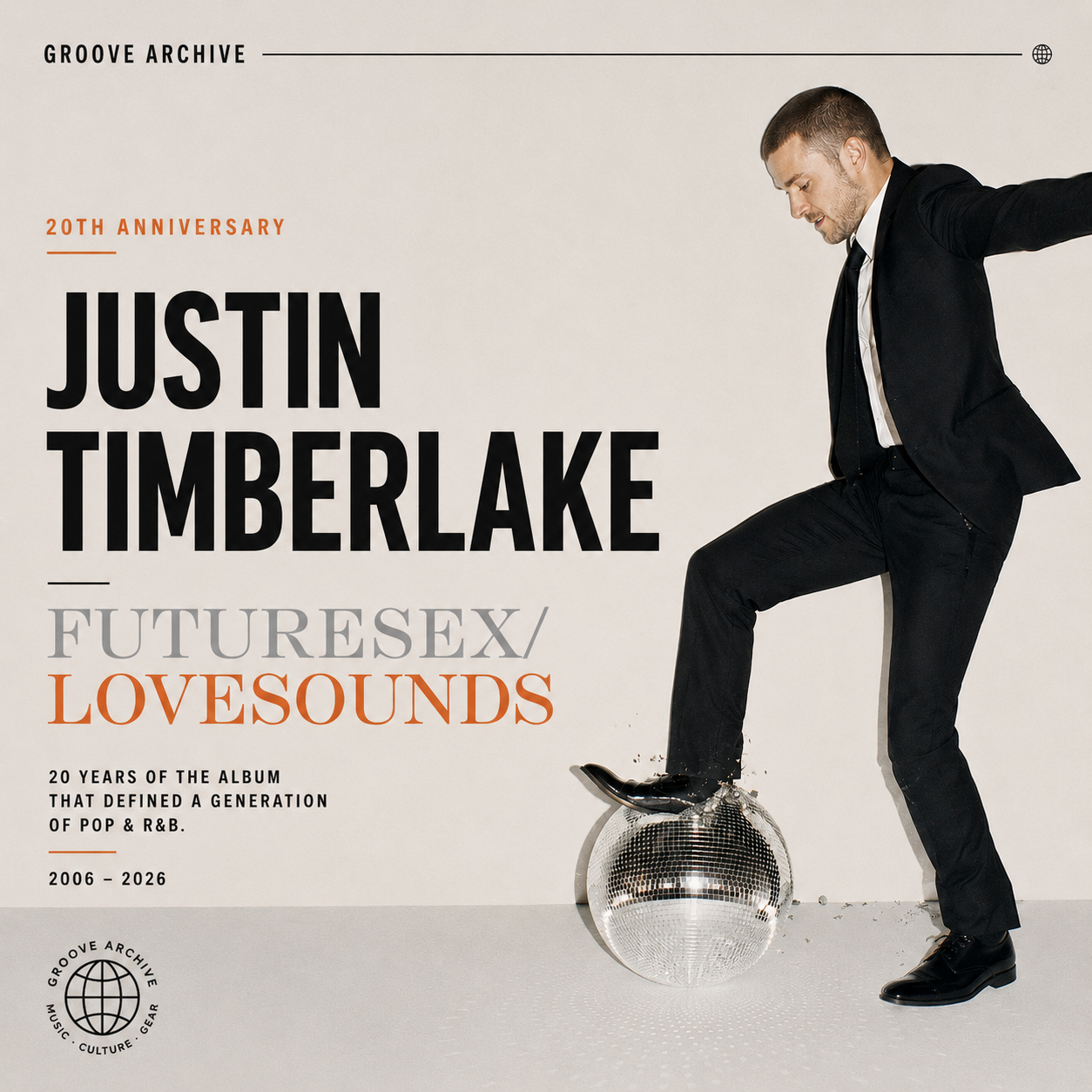
In September 2006, the pop landscape was at a crossroads. The polished boy-band era was a distant memory, and the digital revolution was just beginning to fragment how we consumed music. Amidst this shift, Justin Timberlake released FutureSex/LoveSounds, an album that didn’t just aim for the charts—it aimed for a different dimension. Twenty years later, in 2026, the record remains a startlingly modern artifact.
It was the moment Timberlake stopped being a pop star and became a pioneer, aided by the industrial-funk alchemy of Timbaland and Danja.
As we celebrate its 20th anniversary, we revisit the album that dared to make pop music weird, long, and undeniably sophisticated.
The brilliance of FutureSex/LoveSounds lies in its defiance of the “three-minute radio edit” rule. At a time when pop was becoming increasingly disposable, Timberlake and Timbaland leaned into sprawling, multi-part suites. The album was a sprawling laboratory of sound, blending Prince-indebted funk with techno, beatboxing, and operatic R&B.
The Timbaland-Danja Synergy
One cannot discuss this album without addressing the production trio of Timberlake, Timbaland, and Nate “Danja” Hills. Together, they created a sonic language that felt like it was transmitted from a neon-lit nightclub in the year 2099. Tracks like “SexyBack” were a massive gamble; the distorted vocals and grinding, industrial synths were a far cry from the acoustic “Cry Me a River” era. The production was dense, layered, and high-fidelity, demanding to be heard on a serious sound system. It introduced the mainstream to the “interlude” as an art form—turning songs into six-minute experiences where the groove could breathe, mutate, and evolve.
The Suite Life: Complexity in Pop
What keeps the album fresh twenty years later is its structural ambition. Songs like “What Goes Around… / …Comes Around” and “LoveStoned / I Think She Knows” are essentially two tracks stitched together by visionary transitions. These “LoveSounnd” interludes provided a cinematic atmosphere that pop music rarely attempted. Timberlake’s vocal performance also shifted; he moved away from the earnestness of his debut toward a more detached, rhythmic, and confident persona. He wasn’t just singing over a beat; he was treating his voice as a percussive instrument, weaving in and out of Timbaland’s signature staccato rhythms.
A Legacy of Influence
Looking back from 2026, the DNA of FutureSex/LoveSounds is everywhere. You can hear its influence in the alternative R&B movements of the 2010s and the genre-blurring pop of the current decade. It gave male pop stars permission to be experimental, to embrace longer track lengths, and to integrate avant-garde electronic textures into Top 40 hits.
It was the album that proved “pop” didn’t have to mean “simple.”
Conclusion
Twenty years on, FutureSex/LoveSounds has aged with remarkable grace. While many of its 2006 contemporaries sound like relics of their time, this album still feels like it’s catching up to the present. It was a risky, high-concept gamble that paid off by redefining the parameters of what a pop blockbuster could be. As the first entry in our anniversary series, it serves as a reminder that the most enduring music is often the kind that isn’t afraid to sound like the future before it actually arrives.