Jupiter, Mars, and the End of an Epoch: 20 Years of ‘Stadium Arcadium’
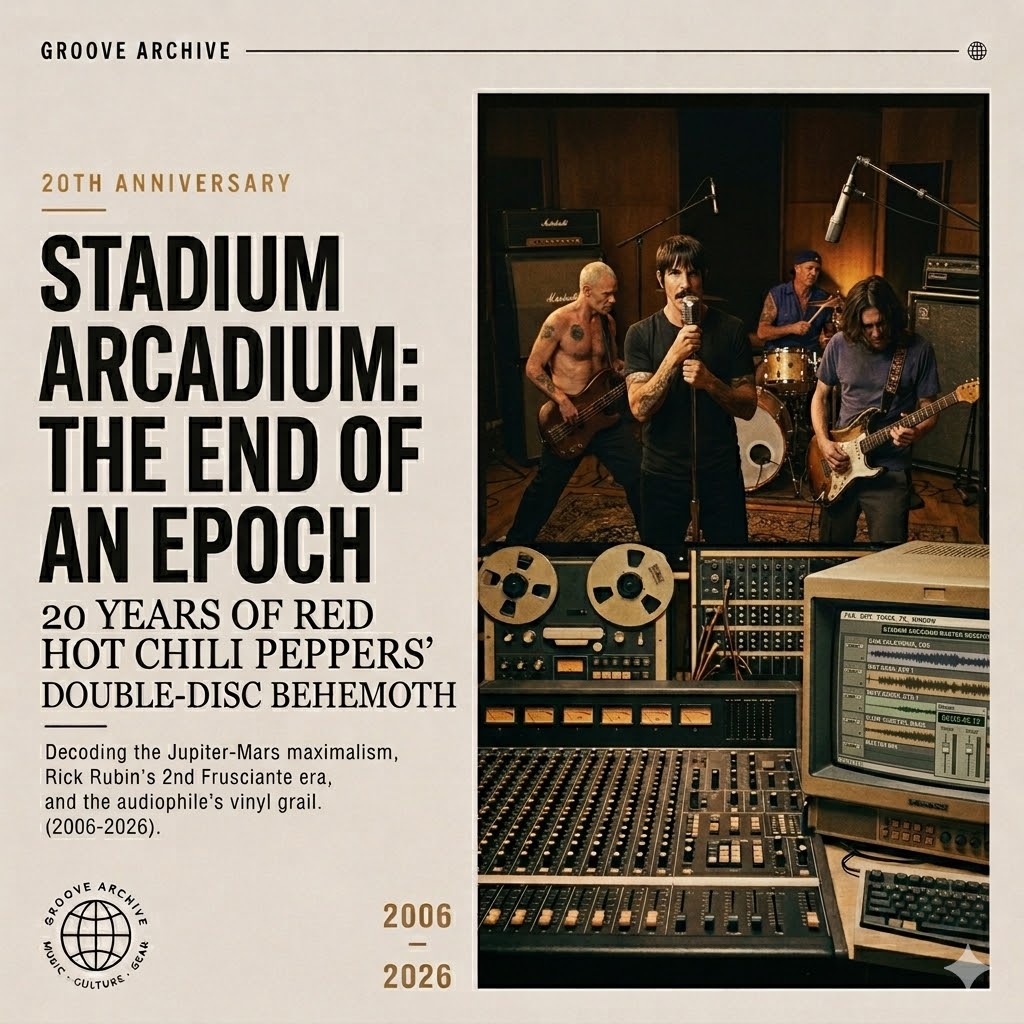
By May 2006, the Red Hot Chili Peppers had already survived multiple lifetimes. They had been punk-funk outlaws, drug-addled survivors, and eventually, the multi-platinum elder statesmen of the California sun.
But Stadium Arcadium was something else entirely—a 28-track, two-hour declaration of absolute creative confidence. Coming off the back of By The Way, the band didn’t choose to refine; they chose to expand.
Looking back from 2026, this album stands as the last great monument of the “classic” second Frusciante era, a record that prioritized analog warmth and instrumental virtuosity in a world that was rapidly turning toward digital compression.
To understand Stadium Arcadium, you have to look past the radio hits like “Dani California.” While the singles provided the commercial armor, the meat of the album lies in its deep-cut maximalism. It was the moment John Frusciante decided to layer his guitar tracks like a baroque composer, moving away from the sparse minimalism of Californication into a world of Hendrix-inspired psychedelia and intricate vocal harmonies.
The Audiophile’s Analog Sanctuary
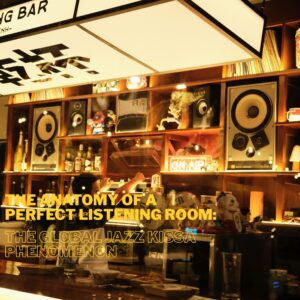
For those who value the physical “breath” of a recording, this album is a holy grail. Recorded to 2-track analog tape with Rick Rubin at “The Mansion,” the production avoids the flat, fatiguing dynamics of its era. If you’re listening through a high-fidelity chain—be it a pair of open-back reference monitors or a meticulous speaker setup—the separation is startling. The kick drum has a physical thud, and the bass has a roundness that modern plugins often fail to replicate. The 2006 Steve Hoffman and Kevin Gray vinyl mastering, in particular, remains the gold standard for how a modern rock record should translate to wax, preserving the “air” around Flea’s basslines and Chad Smith’s thunderous snares.
Frusciante’s Zenith
There is a specific kind of magic on tracks like “Wet Sand” and “Slow Cheetah” where Frusciante’s influence feels almost spiritual. He wasn’t just playing guitar; he was painting textures. The closing solo of “Wet Sand” is frequently cited by fans as his finest moment—not because of its technical speed, but because of its emotional release. This album captured a guitarist who had mastered the art of “the solo as a story,” using a vintage palette to create sounds that felt remarkably fresh. It was the sound of a man who had finally found peace with his instrument, and the result was some of the most melodic shredding ever committed to a double album.
A Career in Summary
Stadium Arcadium functions as a retrospective of the band’s entire DNA. You have the ghost of their funk-rock past in “C’mon Girl,” the melodic sensitivity of their mid-career in “Desecration Smile,” and a glimpse into a more experimental, textured future in tracks like “Animal Bar.” It is an exhausting listen by design. It was never meant to be consumed in a single sitting on a commute; it was a world to be inhabited, a sprawling map of four musicians who had finally learned how to speak the same language at the exact same time.
Conclusion
Twenty years on, Stadium Arcadium marks the end of an era. Shortly after its release and subsequent tour, the band would enter a long hiatus, and the chemistry that defined this record would be altered forever. It remains the Chili Peppers’ most ambitious statement—a double-disc behemoth that refused to compromise on length or depth. In the digital landscape of 2026, where “less is more” is the industry’s mantra, this album serves as a defiant reminder that sometimes, more is exactly what we need.