Echoes of an Icon: Flea Finds Spiritual Resonance in ‘Honora’
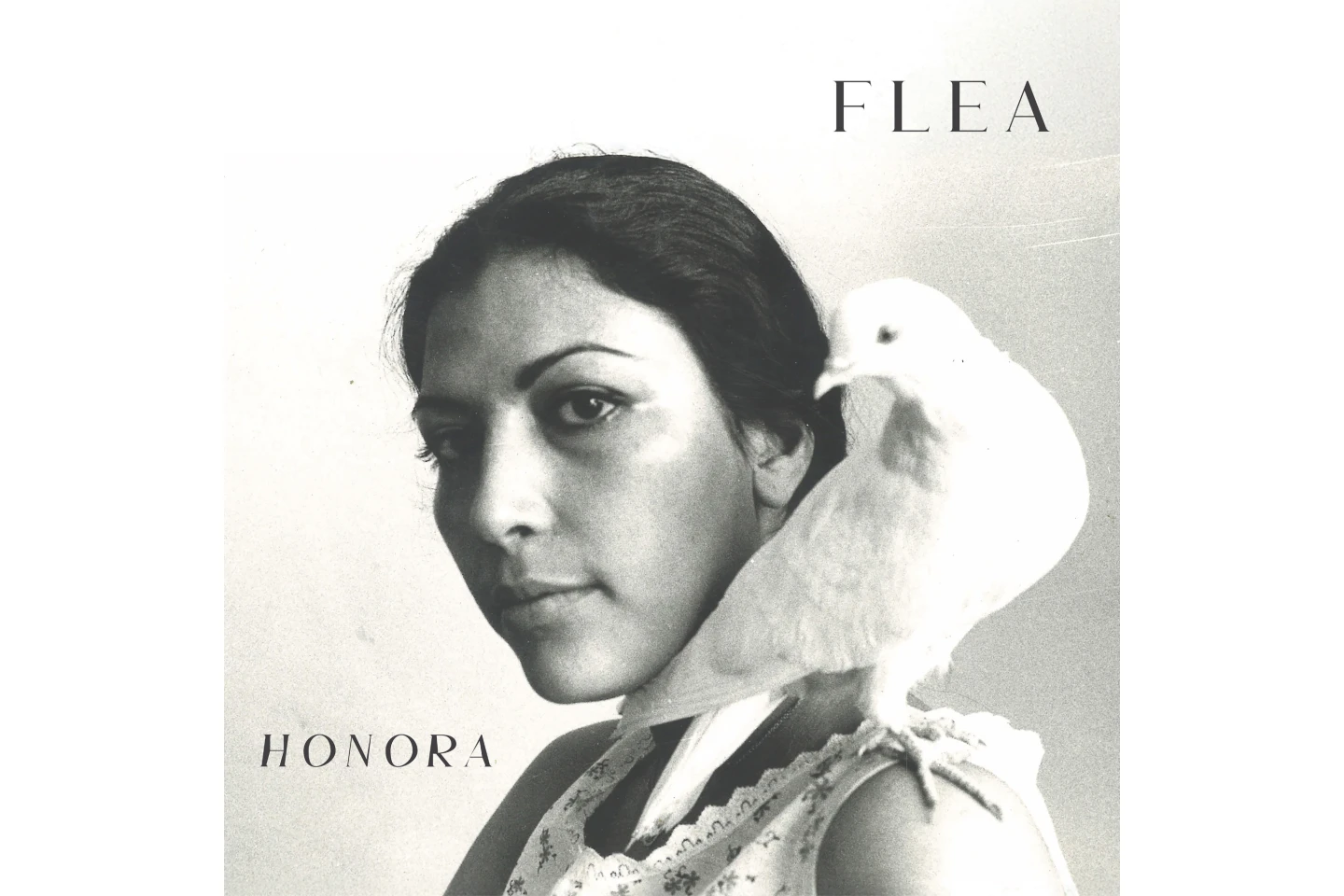
For over four decades, Michael “Flea” Balzary has been the kinetic heartbeat of rock and roll. We’ve watched him evolve from the tube-sock-wearing punk of the 80s Sunset Strip to a high-priest of the four-stringed groove. However, his latest solo endeavor, Honora, strips away the stadium-sized bravado to reveal the man behind the legend. It is an album that doesn’t just ask you to listen to the notes, but to feel the spaces between them, marking a profound shift in the creative output of one of the world’s most recognizable bassists.
Those expecting the thumb-blistering slap-funk of the Chili Peppers will be surprised—and perhaps moved—by the restraint Flea displays here. Honora is a deeply atmospheric, largely instrumental record that leans into Flea’s lifelong love of jazz and his formal education at USC.
The bass is no longer a rhythmic weapon; it is a melodic narrator, often weaving through lush, ambient textures and intricate brass arrangements.
The Jazz Heart and the Trumpet’s Cry
One of the album’s most striking features is Flea’s trumpet playing. It’s no secret that his musical origins began with the brass instrument, influenced by his stepfather’s jazz sensibilities, but on Honora, his horn sounds more evocative than ever. There is a Miles Davis-esque “lonely city” vibe in tracks like the title opener, where the bass serves as a grounding drone for the trumpet’s soaring, melancholic melodies. This isn’t a musician trying to prove his versatility; it’s a veteran artist returning to his roots to find peace.
The Haunting Guests: Yorke and Cave
What elevates Honora from a solo experiment to a landmark release are the guest appearances by two of alternative music’s most enigmatic voices. Thom Yorke lends his ethereal, fractured vocals to the track “Static Memory,” a collaboration that feels like a natural evolution of their work together in Atoms for Peace. Flea’s jagged, syncopated basslines dance around Yorke’s haunting falsetto, creating a nervous, electronic energy that is both beautiful and unsettling.
Contrastingly, the appearance of Nick Cave on the closing track “The Altar” provides the album’s emotional anchor. Cave’s gravelly, baritone delivery acts as a perfect foil to Flea’s mournful trumpet solos. It is a slow-burn masterpiece, a gothic-jazz prayer that sounds like a midnight confession. Hearing Flea provide such a delicate, stripped-back sonic cradle for Cave’s storytelling is a reminder that his greatest strength has always been his ability to listen and react.
A Modern Minimalist Approach
The production on the album is remarkably crisp, allowing every vibration of the strings to resonate. There are moments of glitchy electronic percussion and subtle synth-pads that suggest a growing interest in neo-classical and modern ambient genres. Yet, Flea’s signature touch is everywhere. Even in the quieter moments, you can hear the physical grit of his playing—the slide of a finger across a fret, the heavy resonance of an open string. It’s an intimate recording that feels like sitting in his home studio during a late-night session.
Conclusion
Honora is a testament to the idea that true legends never stop evolving. Flea could easily have spent the rest of his career repeating his greatest hits, but instead, he chose to embrace vulnerability and quietude. This album is a gift to long-time followers: a chance to hear the inner world of a musician who has spent his life making noise, finally finding power in the silence.